TL;DR (Too Long; Didn't Read)
If your washing machine is making loud noises, the problem is usually one of five issues: unbalanced load (banging during spin), worn drum bearings (grinding/roaring sound), drive belt problems (squealing), pump obstruction (clicking/rattling), or failed suspension (thumping). Simple fixes like redistributing clothes or leveling the machine cost nothing. Mechanical repairs range from $120-$500 depending on the problem. If your machine is over 8 years old and needs bearing replacement, buying a new washer is usually more cost-effective.
Quick DIY checks: Level the machine, redistribute the load, clean the pump filter, and check for loose objects. If the noise persists or gets worse, professional repair is needed within 24-48 hours to prevent further damage.
When to call immediately: Grinding noises during spin cycle, burning smell, or visible leaking water.
🚨 NEED IMMEDIATE HELP?
Call (321) 559-0933 Now for Same-Day Service
✓ Answer in 30 seconds or less
✓ Same-day appointments available
✓ Most repairs completed in one visit
✓ 90-day warranty on all repairs
✓ 15+ years in business | 2,100+ verified customers
Don't wait—loud noises mean something is failing. The longer you wait, the more expensive the repair becomes.
Understanding What Your Washing Machine's Noise Means
Washing machines are designed to operate quietly, with only a gentle hum during normal operation. When your washer suddenly starts making loud, disruptive noises, it is trying to tell you something is wrong. The type of noise provides critical clues about which component is failing and how urgently you need to act.
Modern washing machines contain several moving parts that work together to clean your clothes: the drum spins at high speeds (up to 1,200 RPM during the spin cycle), the motor drives the belt, suspension springs absorb vibration, and the pump drains water. When any of these components wear out or malfunction, the result is often a loud, alarming noise that signals imminent failure.
The good news is that not all loud noises mean your washing machine is beyond repair. Many issues can be fixed affordably if you catch them early. However, ignoring these warning signs typically leads to more extensive damage and significantly higher repair costs. In some cases, continued use of a noisy washing machine can cause catastrophic failure, leaving you with a flooded laundry room and a completely dead appliance.
The 5 Types of Washing Machine Noises (And What They Mean)
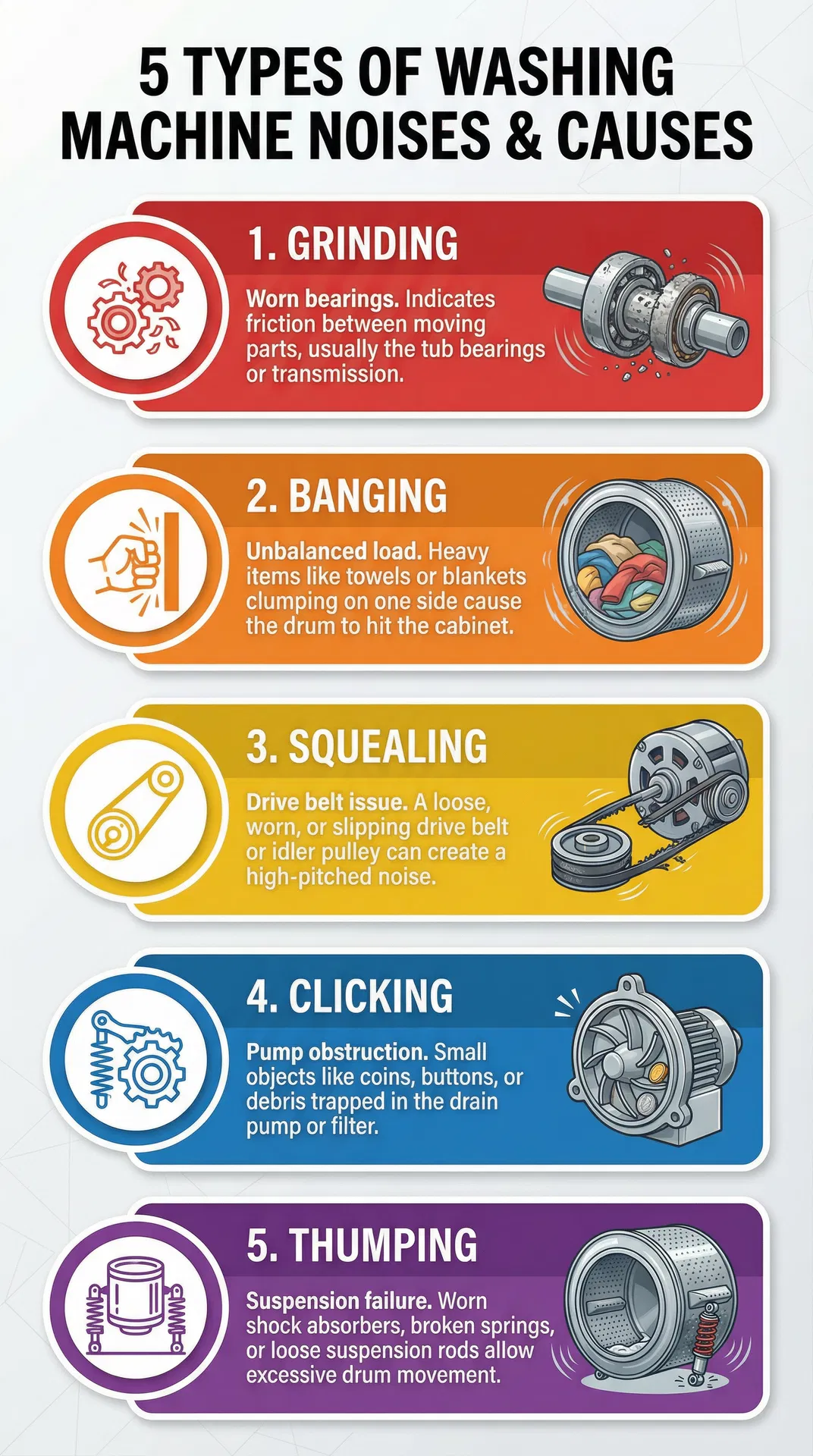
1. GRINDING Noise (Worn Drum Bearings)
What it sounds like: A loud, continuous grinding or roaring sound that gets worse during the spin cycle. It sounds like metal scraping against metal or a jet engine taking off.
What's causing it: The drum bearings are worn out. These bearings support the inner drum and allow it to spin smoothly. When they fail, the drum shaft grinds directly against the bearing housing, creating the characteristic grinding noise.
Is it safe to use? No. Continuing to use a washing machine with failed bearings will cause the drum to wobble excessively, potentially damaging the drum, tub, and even the outer casing. You may also notice water leaking from the tub seal as the misaligned drum damages the rubber gasket.
Repair cost: $250-$500 (labor-intensive repair requiring disassembly of the entire drum assembly)
Repair vs replace: If your washing machine is over 7-8 years old, replacement is usually more economical. Bearing replacement is one of the most expensive repairs, often costing 50-70% of a new machine's price.
Brand-specific notes: LG and Samsung front-load washers are particularly prone to bearing failure after 5-7 years of use. Whirlpool and Maytag top-loaders tend to have more durable bearings but are not immune to this problem.
2. BANGING Noise (Unbalanced Load)
What it sounds like: Heavy, rhythmic banging or thumping during the spin cycle. The entire machine may shake violently and "walk" across the floor.
What's causing it: An unbalanced load is the most common cause. Heavy items like towels, blankets, or jeans can clump together on one side of the drum, creating an imbalance. When the drum spins at high speed, the uneven weight distribution causes the machine to bang against its casing.
Is it safe to use? Generally yes, but you should stop the cycle immediately and redistribute the load. Repeated unbalanced cycles can damage the suspension system over time.
Repair cost: $0-$50 (usually a DIY fix by redistributing clothes or leveling the machine)
DIY fix: Open the door, manually redistribute the clothes evenly around the drum, and restart the cycle. If the problem persists, check that the machine is level using a bubble level and adjust the feet as needed.
When it's not just the load: If the machine bangs even with a properly balanced, small load, the suspension springs or shock absorbers may be damaged. This requires professional repair ($200-$400).
3. SQUEALING Noise (Drive Belt Issue)
What it sounds like: A high-pitched squealing or squeaking sound, similar to a car with a loose serpentine belt. The noise may be constant or intermittent.
What's causing it: The drive belt that connects the motor to the drum pulley is worn, loose, or slipping. Over time, rubber belts stretch, crack, and lose their grip. A loose belt slips on the pulley, creating the squealing sound.
Is it safe to use? Yes, temporarily. However, a worn belt will eventually break, leaving your washer unable to spin. It is best to replace the belt before it fails completely.
Repair cost: $120-$200 (includes belt replacement and labor)
DIY potential: If you are mechanically inclined, drive belt replacement is a moderately difficult DIY repair. You will need to access the back or bottom of the machine, remove the old belt, and install a new one. Replacement belts cost $15-$30 online.
Prevention: Overloading the washer puts excessive strain on the belt, accelerating wear. Follow the manufacturer's load capacity guidelines to extend belt life.
4. CLICKING or RATTLING Noise (Pump Obstruction)
What it sounds like: A clicking, rattling, or buzzing noise during the drain cycle. You may also hear a grinding sound if the pump is trying to move but cannot.
What's causing it: Small objects like coins, buttons, bra underwires, or debris have become lodged in the drain pump or pump filter. The pump impeller tries to spin but hits the obstruction, creating the clicking sound.
Is it safe to use? No. A blocked pump cannot drain water properly, which can lead to standing water in the drum, mold growth, and potential pump motor burnout if the machine continues trying to drain.
Repair cost: $0-$50 (DIY filter cleaning) or $150-$300 (pump replacement if damaged)
DIY fix: Locate the drain pump filter (usually behind a small access panel at the front bottom of the machine). Place a shallow pan underneath, open the filter, and remove any debris. Run a drain cycle to test.
When to call a pro: If the pump is damaged or the impeller blades are broken, the entire pump assembly needs replacement. This is a straightforward repair for a technician but requires disassembly and part replacement.
5. THUMPING Noise (Suspension Failure)
What it sounds like: A repetitive thumping or knocking sound during the spin cycle, even with a balanced load. The drum may visibly bounce or hit the sides of the casing.
What's causing it: The suspension springs, shock absorbers, or suspension rods that stabilize the drum have worn out or broken. These components absorb the vibration and movement of the spinning drum. When they fail, the drum moves excessively and hits the machine's outer casing.
Is it safe to use? No. Excessive drum movement can damage the drum, tub, and internal components. Continued use may cause the drum to crack or the tub to break, resulting in a total loss.
Repair cost: $200-$400 (includes replacement of suspension springs or shock absorbers)
DIY test: With the machine off and empty, push down firmly on the top of the drum. If it bounces more than once or twice, the suspension system is failing.
Brand-specific notes: Front-load washers rely heavily on shock absorbers, while top-load washers use suspension rods. Both systems can fail after 8-10 years of use.
DIY Troubleshooting: 6 Steps to Diagnose the Problem
Before calling a repair technician, try these six diagnostic steps to identify the source of the noise:
Step 1: Empty the drum and run a spin cycle. If the noise disappears, the problem is likely an unbalanced load or an object caught between the drum and tub.
Step 2: Check the machine's level. Place a bubble level on top of the washer. If it is not level, adjust the feet until all four corners are stable and the bubble is centered.
Step 3: Inspect the drain pump filter. Remove any coins, lint, or debris. A clogged filter is one of the most common causes of clicking and rattling noises.
Step 4: Manually spin the drum. With the machine off and empty, reach inside and spin the drum by hand. Listen for grinding, scraping, or resistance. A healthy drum should spin smoothly and quietly.
Step 5: Check for loose objects. Small items can fall between the inner drum and outer tub. Shine a flashlight through the drum holes and look for trapped objects.
Step 6: Run a test cycle with a small, balanced load. Use a few towels evenly distributed around the drum. If the noise persists, the problem is mechanical and requires professional repair.
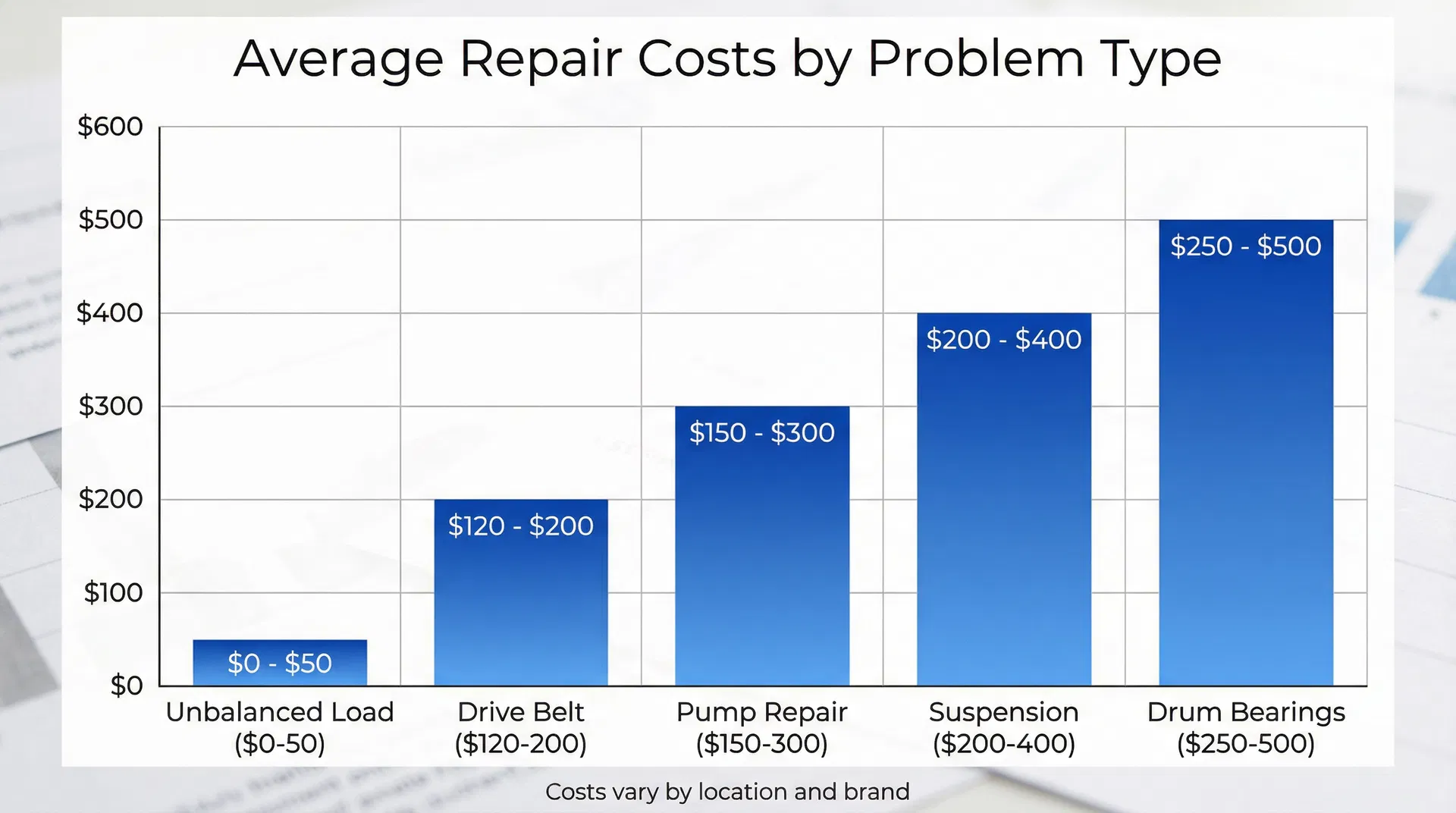
Repair Costs by Problem Type
| Problem | Repair Cost | Time to Fix | Urgency |
|---|---|---|---|
| Unbalanced Load | $0-$50 | 5-10 minutes | Low |
| Drive Belt | $120-$200 | 1-2 hours | Medium |
| Pump Obstruction/Repair | $150-$300 | 1-2 hours | High |
| Suspension System | $200-$400 | 2-3 hours | High |
| Drum Bearings | $250-$500 | 3-5 hours | Critical |
Note: Costs vary by location, brand, and whether parts are under warranty. Always get a written estimate before authorizing repairs.
Repair vs Replace: When to Buy a New Washing Machine
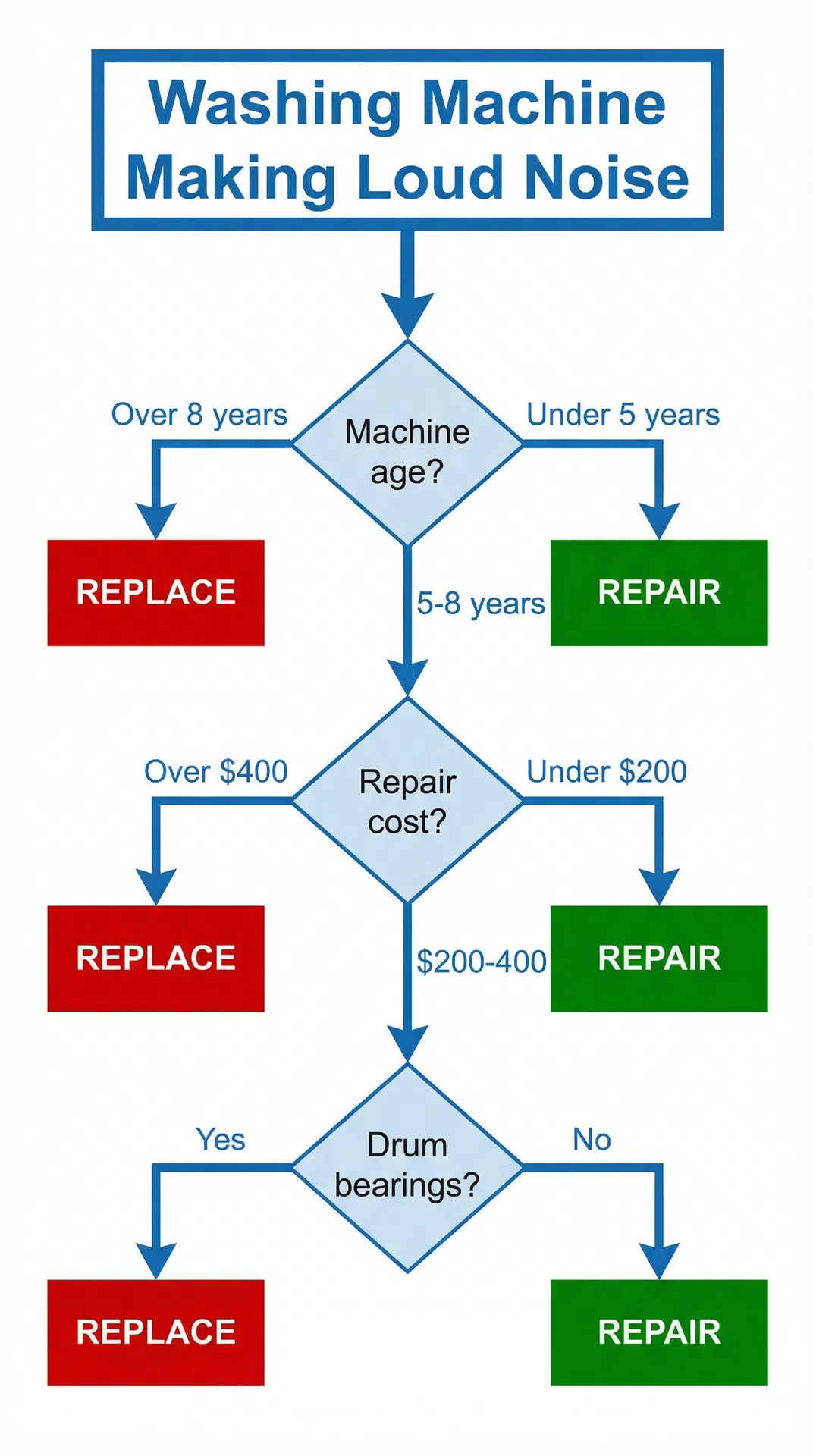
Not every loud washing machine is worth repairing. Use this decision framework to determine whether repair or replacement makes more financial sense:
REPAIR if:
- The machine is less than 5 years old
- The repair cost is under $200
- The problem is a simple fix (belt, pump, suspension)
- The machine is a high-end model (Speed Queen, Miele, etc.)
REPLACE if:
- The machine is over 8 years old
- The repair cost exceeds 50% of a new machine's price
- Drum bearings need replacement (labor-intensive and expensive)
- Multiple components are failing simultaneously
- The machine has a history of frequent repairs
GRAY AREA (5-8 years old, $200-$400 repair cost):
- Consider the machine's overall condition and repair history
- If this is the first major repair, fixing it may extend its life by 3-5 years
- If you have had multiple repairs already, replacement is likely the better investment
The Cost of Waiting: Why You Shouldn't Ignore Loud Noises
Many homeowners make the mistake of continuing to use a noisy washing machine, hoping the problem will resolve itself or that they can "live with it" until it completely fails. This is a costly mistake for several reasons:
Progressive damage: A worn drive belt will eventually snap, leaving you with a washer that cannot spin. Failed bearings will damage the drum and tub, turning a $300 repair into a $600-$800 repair or total replacement.
Water damage risk: Excessive vibration from failed suspension can cause water supply hoses to loosen or break, potentially flooding your laundry room. Water damage to flooring, drywall, and adjacent rooms can cost thousands of dollars to repair.
Energy waste: A washing machine with mechanical problems works harder and less efficiently, consuming more electricity and water. You are paying higher utility bills while the machine deteriorates.
Safety hazards: In extreme cases, a violently shaking washing machine can tip over, break water lines, or cause electrical shorts. These scenarios pose serious safety risks to your household.
Bottom line: Addressing loud noises promptly saves money, prevents secondary damage, and extends the life of your appliance.
🚨 GET YOUR WASHING MACHINE FIXED TODAY
Call (321) 559-0933 for Expert Diagnosis and Repair
✓ Certified technicians with 15+ years of experience
✓ Upfront pricing with no hidden fees
✓ 90-day warranty on all repairs
✓ Same-day service available
✓ We repair all major brands: LG, Samsung, Whirlpool, Maytag, GE, and more
Don't let a small problem become a big expense. Call now and get your washing machine running quietly again.
Brand-Specific Issues: Common Problems by Manufacturer
LG Front-Load Washers
Common issue: Drum bearing failure after 5-7 years. LG bearings are sealed units that cannot be serviced individually, requiring replacement of the entire drum assembly ($400-$600).
Samsung Front-Load Washers
Common issue: Suspension rod failure and drum spider corrosion. The drum spider (the component that connects the drum to the shaft) can corrode and break, causing loud banging noises.
Whirlpool/Maytag Top-Load Washers
Common issue: Drive coupler failure. The plastic coupler that connects the motor to the transmission can wear out, causing a loud grinding noise during agitation.
GE Top-Load Washers
Common issue: Clutch assembly wear. The clutch engages the drum during the spin cycle. When it wears out, you will hear a loud grinding or scraping noise.
FAQ: Washing Machine Noise Questions Answered
Q: Is it safe to use a washing machine that is making loud noises?
A: It depends on the noise. Banging from an unbalanced load is safe to fix mid-cycle. Grinding, squealing, or thumping noises indicate mechanical failure and should not be ignored. Stop using the machine and call a technician.
Q: Can I fix a noisy washing machine myself?
A: Simple issues like unbalanced loads, leveling the machine, and cleaning the pump filter are easy DIY fixes. Replacing a drive belt is moderately difficult. Bearing replacement and suspension repair require professional tools and expertise.
Q: How long does a washing machine typically last?
A: The average lifespan is 10-12 years. High-end brands like Speed Queen and Miele can last 15-20 years with proper maintenance. Budget models may only last 7-10 years.
Q: Will a loud washing machine damage my clothes?
A: Excessive vibration and drum movement can cause premature wear on fabrics. Grinding noises may indicate rough surfaces inside the drum that can snag or tear delicate items.
Q: Should I repair or replace a 10-year-old washing machine?
A: If the repair cost is over $300 and the machine is 10+ years old, replacement is usually the better financial decision. Modern machines are more energy-efficient, which will save you money on utility bills over time.
Q: What is the most expensive washing machine repair?
A: Drum bearing replacement is the most expensive repair, ranging from $250-$500 depending on the brand and model. It requires complete disassembly of the drum assembly and is extremely labor-intensive.
Preventive Maintenance: How to Keep Your Washing Machine Quiet
1. Do not overload the machine. Follow the manufacturer's load capacity guidelines. Overloading strains the motor, belt, and suspension system.
2. Use the correct detergent. High-efficiency (HE) washers require HE detergent. Regular detergent creates excess suds that can damage the pump and leave residue in the drum.
3. Level the machine properly. Check the level every 6 months and adjust the feet as needed. An unlevel machine vibrates excessively and wears out suspension components faster.
4. Clean the pump filter monthly. Remove lint, coins, and debris to prevent pump obstructions and extend pump life.
5. Leave the door open after each cycle. This allows the drum and gasket to dry, preventing mold growth and rubber deterioration.
6. Inspect hoses and connections annually. Replace cracked or bulging hoses to prevent leaks. Tighten loose connections to avoid vibration-related damage.
Final Thoughts: Do not Ignore the Warning Signs
A loud washing machine is not just an annoyance—it is a warning sign that something is failing. Whether it is a simple unbalanced load or a serious bearing failure, addressing the problem promptly will save you money, prevent secondary damage, and extend the life of your appliance.
If you have tried the DIY troubleshooting steps and the noise persists, it is time to call a professional. Certified appliance repair technicians have the tools, expertise, and replacement parts to diagnose and fix the problem quickly.
🔧 READY TO FIX YOUR WASHING MACHINE?
Call (321) 559-0933 Now
✓ Same-day appointments available
✓ Certified, experienced technicians
✓ 90-day warranty on all repairs
✓ Upfront pricing—no surprises
✓ We repair all major brands
Do not wait until your washing machine breaks down completely. Call now and get it fixed today.
Need Professional Help?
Connect with certified local appliance repair technicians who can fix your dishwasher today.